


Czech Companies Can Already Join the ESA Phi-Lab calls
For many Czech technology companies, the ESA Phi-Lab network still looks like something new that belongs mainly to countries which already have their own national ESA Phi-Lab. This is understandable. Each Phi-Lab has a national anchor, its own thematic focus, its own local ecosystem and its own calls. From the outside, it may look as if Czech companies must wait until the Czech Republic has its own ESA Phi-Lab before they can participate. But the experiance shows the opposite.
Czech companies, research organisations and technical institutes can already take part in ESA Phi-Lab projects today. The key is to understand the correct role. In most cases, a Czech organisation will not be the main applicant in another country’s ESA Phi-Lab. The more realistic and safer route is to join a project as a space know-how provider, technical partner, or ssubcontractor working with a local lead in the ESA Phi-Lab country.
In practice, this means that a Czech company can participate if it brings a capability that the local project genuinely needs: space engineering know-how, subsystem expertise, optics and laser, test infrastructure, manufacturing competence, or experience with ESA programmes.
How the money usually works
ESA Phi-Lab projects usually support early-stage but serious innovation: proof-of-concept work, prototypes, demonstrators, validation, and technology development with a clear route to market. A good fit is typically a project starting around TRL 2–5, with the aim of moving towards TRL 4–6, depending on the call.
Funding depends on the country and call, but a practical planning range is usually around €200,000–€400,000 per 1 project. Some calls may go higher or include in-kind support. Projects often last up to 24 months (max. 2 years). For companies joining a Phi-Lab outside their own country, the key point is that most of the budget usually needs to stay in the Phi-Lab country. A useful planning assumption is around 70% local / 30% non-local, but this is not a fixed rule and must always be checked in the call documents.
For a Czech company, this means a realistic role is often a focused technical work package worth up to about 30% of the project budget. For example, in a €400,000 project, that could mean around €120,000 for the Czech partner; in a €500,000 project, around €150,000.
The strongest approach is to position the Czech company as a focused and valuable contributor to the proposal, rather than as the central applicant. Its role should be clearly defined around a high-value technical contribution that strengthens the local applicant’s project and increases the overall quality, relevance and credibility of the proposal.
The VZLU example: Czech space know-how inside an Austrian ESA Phi-Lab project
VZLU was selected as a know-how from space subcontractor in an Austrian Phi-Lab project. The applicant was an Austrian company, while VZLU provided the space know-how expertise needed to strengthen the technical and application logic of the project.
This happened roughly six to eight months after an earlier information and matchmaking campaign. That campaign helped connect Czech capabilities with foreign Phi-Lab opportunities. In this case, the Austrian applicant needed space-domain expertise, and VZLU was selected to provide it. The lesson is important: Czech organisations can enter the ESA Phi-Lab network through value, not through nationality.
The ESA Phi-Lab network: what each hub does and where Czech companies may fit
The ESA Phi-Lab network is not one generic funding programme, but this is a network of thematic competence centres. Each Phi-Lab has a different focus, and the Czech opportunity depends on matching the right Czech technology to the right hub.
Below is a practical overview for Czech companies.
ESA Φ-Lab at ESRIN, Italy
The original ESA Φ-Lab is based at ESRIN in Frascati, Italy. It is the central ESA hub for innovation in Earth Observation. Its focus includes Earth Observation data, AI, foundation models, edge and on-board computing, quantum computing, digital twins, commercialisation and disruptive innovation.
For Czech companies, this is relevant if they work with Earth Observation, AI for satellite data, downstream analytics, digital twins, climate or environmental monitoring, EO commercialisation, or advanced processing of satellite data.
This is not usually the easiest entry point for a Czech SME looking for a national Phi-Lab-style project. However, it is strategically important because it shapes the overall ESA Φ-lab innovation agenda.
Contact route: central ESA Φ-lab contact form or phi-lab@esa.int.
ESA Phi-Lab Austria
ESA Phi-Lab Austria is focused on upstream space innovation, especially the industrialisation of space hardware and software. This makes it highly relevant for Czech companies working on satellite components, avionics, embedded systems, mechanisms, optics, structures, thermal hardware, ground-support equipment, manufacturing processes, testing, space-qualified electronics or upstream software.
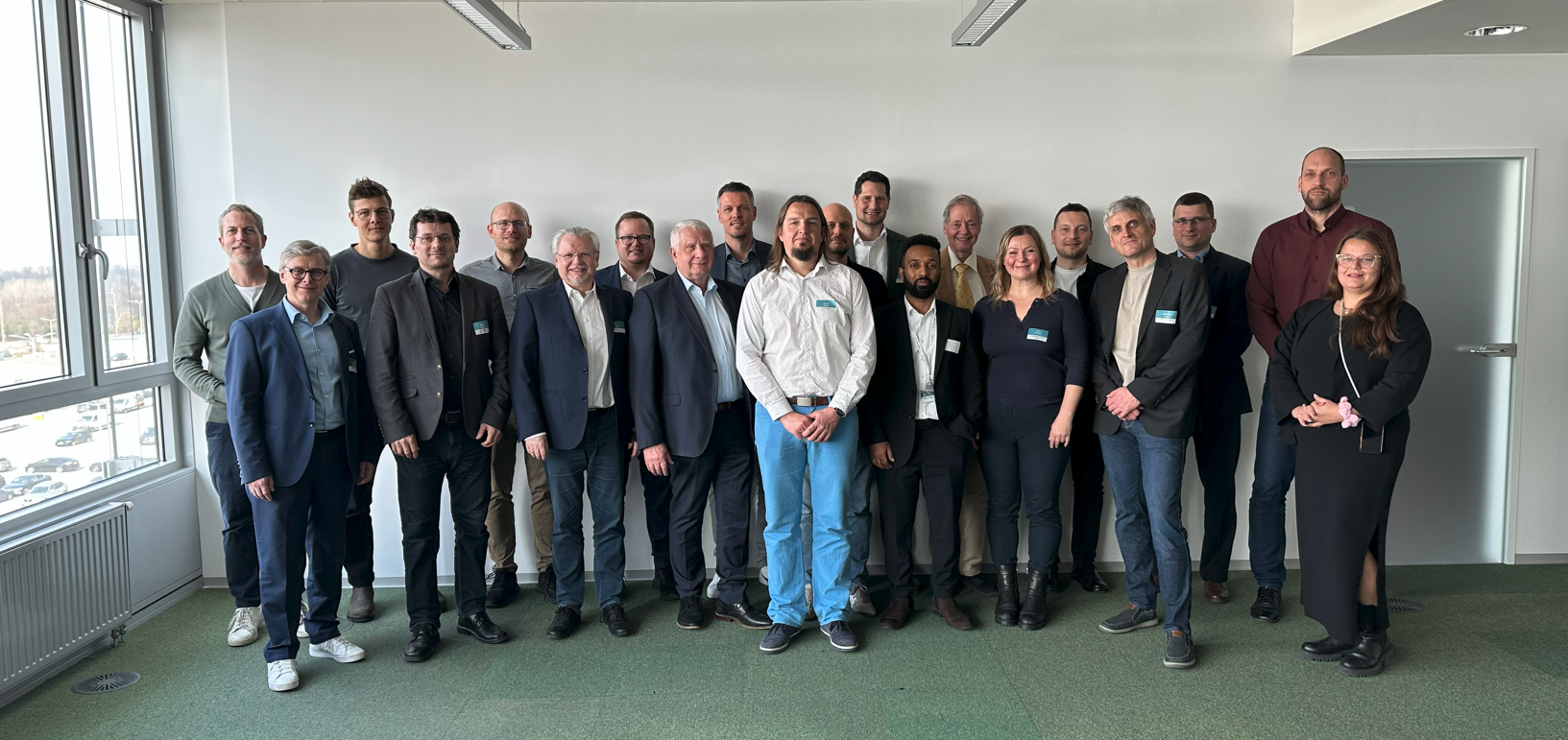
For Czech companies, Austria is one of the most practical Phi-Lab opportunities because of geographical proximity and existing Czech–Austrian upstream matchmaking. There are two possible routes.
- The first route is to work with an Austrian partner as the lead applicant. This is usually the most natural and safest model. The Austrian partner brings the local eligibility and ecosystem impact, while the Czech company contributes a specialist technical work package.
- The second route is more difficult and unlikely (we dont recommend that): a Czech company may act as prime only if it can prove a strong Austrian impact. This could mean Austrian partners, Austrian industrial return, Austrian supply-chain benefit, Austrian testing or manufacturing involvement, or a clear contribution to the Austrian upstream space ecosystem.
Typical funding: approximately €200,000 to €500,000 per 1 project, depending on the call. Typical Czech/non-local share: plan around up to 30% of the total project budget, unless the call allows otherwise. Known application route: applicants are usually asked to contact ESA Phi-Lab Austria early and use pre-proposal support. Applications and call documents are handled through the Austrian Phi-Lab process.
Contact route: ESA Phi-Lab Austria application/contact form; in previous call materials, applications were also associated with esaphilab@accent.at.
Deadline: past and current calls have had specific deadlines; the Czech presentation indicates further Austrian opportunity windows around autumn 2026 to spring 2027. This must be checked in the current Austrian call documents.
ESA Phi-Lab Ireland
ESA Phi-Lab Ireland focuses on next-generation space-optimised hardware. Its technical priorities include advanced materials, design optimisation, additive manufacturing, structural analysis and simulation, production process optimisation and integration of smart materials.
For Czech companies, Ireland is relevant if they have strong hardware, manufacturing, materials, robotics, mechanical design, structural analysis, testing or advanced production capabilities. Software can fit, but mainly where it directly supports hardware or manufacturing, for example AI-driven materials design or simulation tools for production optimisation.
Typical funding: the current Irish model has indicated up to around €400,000 per project and project duration up to 24 months.
Local/non-local split: the working model is 70:30 Irish/non-Irish, meaning a Czech partner should normally expect a limited and well-justified work package.
Funding rates may depend on organisation type. The Czech workshop material indicates a model where SMEs, research organisations and large companies may have different rates, with research organisations and SMEs typically treated more favourably than large companies.
Best Czech route: find an Irish lead partner first, then define the Czech role as a specialist hardware, manufacturing, materials or testing work package.
Contact route: ESA Phi-Lab Ireland helpdesk, info@esaphilab.ie.
Deadline: the 2025 Irish open call deadline was 16 September 2025. Future calls should be checked through ESA Phi-Lab Ireland’s open call page.
ESA Phi-Lab Sweden
ESA Phi-Lab Sweden focuses on AI, edge computing, cognitive cloud computing and autonomous intelligent space systems. Its goal is to support technologies that allow satellites and space-borne platforms to operate with more autonomy, intelligence and computational efficiency.
For Czech companies, Sweden is relevant if they work on onboard AI, edge processing, intelligent satellites, autonomous systems, next-generation space computing architectures, embedded AI, data chains onboard satellites, or hardware/software platforms for autonomous space systems.
Typical funding: Swedish sources indicate approximately 2.5 million to 4 or 5 million SEK per project, depending on the specific call.
Duration: up to 24 months in current call structures.
Non-local participation: Swedish participants are usually central. Cooperation with organisations from other ESA Member States may be possible, but Czech companies should assume that their role needs to be linked to Swedish impact and call eligibility.
Known deadline: current public material has indicated a 2026 deadline around 15 June 2026, but this must always be confirmed on the official Swedish call page or Vinnova portal.
Application route: through Vinnova’s online service and parallel submission to ESA Phi-Lab Sweden where required.
Contact route: info@esaphilab.se.
ESA Phi-Lab Finland
ESA Phi-Lab Finland focuses on disruptive geospatial innovation for space. This includes Earth Observation, sensors, GIS computing, PNT, GNSS and related commercial geospatial applications.
For Czech companies, Finland is relevant if they work on geospatial analytics, EO applications, GNSS/PNT solutions, sensor systems, mapping, location intelligence, satellite-data services, environmental monitoring, forestry, infrastructure monitoring, Arctic-relevant data services or commercial geospatial platforms.
Total programme funding: ESA Phi-Lab Finland has announced €4.4 million of project funding support over 2025–2030.
Call structure: permanent open call, with selection cut-off dates at least once a year.
Known deadline/cut-off: the 2026 cut-off date is indicated as 7 September 2026.
Eligibility: Finnish entities are central. Czech participation should therefore be structured through a Finnish lead or a partnership with clear Finnish benefit.
Contact route: ESA Phi-Lab Finland; esaphilabfinland@aalto.fi as a contact route for documents and questions.
ESA Phi-Lab Switzerland / ESDI
The Swiss Phi-Lab is connected to the European Space Deep-Tech Innovation Centre, ESDI. Its focus is deep-tech innovation, including quantum technologies, data science and advanced materials. It is positioned around high-end scientific and technological breakthroughs with space relevance.
For Czech companies, Switzerland is relevant if they work on quantum sensing, advanced materials, data science for satellite applications, predictive analytics, deep-tech hardware, instrumentation, or technologies that can connect space systems with terrestrial applications such as agriculture, transport, energy, infrastructure or climate monitoring.
Known funding and deadlines: these are call-specific. A previous Swiss “Quantum x Space” call had a deadline in 2025. Future opportunities should be checked directly with ESDI / Phi-Lab Switzerland.
Best Czech route: approach through a Swiss partner, research centre or industrial lead where Czech expertise fills a specific deep-tech gap.
Contact route: ESDI / Phi-Lab Switzerland contact form.
ESA Phi-Lab Spain
ESA Phi-Lab Spain focuses on space-based solutions for climate resilience. This includes both upstream and downstream technologies if they help develop, industrialise or commercialise solutions relevant to climate resilience.
For Czech companies, Spain is relevant if they work on climate services, Earth Observation, environmental monitoring, water management, drought monitoring, agriculture, wildfire monitoring, infrastructure resilience, satellite-enabled risk assessment, or space technologies that support climate adaptation.
Known funding and deadlines: Spain has operated open calls with cut-off dates. A previous call cycle included a second cut-off date, and older public material referenced a deadline in January 2025. Current dates must be checked on the ESA Phi-Lab NET Spain call page.
Best Czech route: partner with a Spanish lead and show how the Czech technology improves a climate-resilience solution with clear relevance for Spain.
Contact route: ESA Phi-Lab NET Spain programme page/contact route.
ESA Phi-Lab Norway / Arctic Phi-Lab
ESA Phi-Lab Norway, also known as the Arctic Phi-Lab, focuses on space-enabled technologies addressing Arctic ocean needs. This includes Earth Observation, Arctic monitoring, environmental management, safety, resources, polar operations, resilient infrastructure and technologies for extreme conditions.
For Czech companies, Norway is relevant if they work on technologies that can be validated in harsh environments or adapted from polar to space applications. Examples include sensing, robotics, materials, surface treatment, laser applications, remote monitoring, autonomous systems, EO analytics, communications and field validation.

A Czech best-practice example already exists in this direction: HiLASE, Narran and ESA Phi-Lab Norway explored laser cleaning in extreme conditions, with the polar environment acting as a testbed for space-relevant applications.
Known deadline: a previous Arctic Phi-Lab open call closed on 24 October 2025. Future call dates must be checked through the Arctic Phi-Lab site.
Contact route: application@arcticphilab.no or Arctic Phi-Lab contact forms.
Best Czech route: define a project where Czech technology is useful in Arctic conditions and has a credible link to space applications.
ESA Phi-Lab Poland
ESA Phi-Lab Poland focuses on robotics, AI, autonomy and related space applications. Current public call material has highlighted software and hardware solutions for autonomous in-orbit robotic operations.
For Czech companies, Poland is relevant if they work on robotics, autonomous systems, AI, space robotics hardware, perception, control systems, simulation, in-orbit servicing technologies, robotic navigation, mechatronics, or testing environments for autonomous operations.
Known deadline: Open Call #2 has been listed as opening on 20 April 2026 and closing on 29 May 2026 at 23:59.
Eligibility: applications are expected from entities registered in Poland or delivering a clear benefit to Poland. This means Czech companies should normally work with a Polish lead or demonstrate strong Polish impact.
Contact route: ESA Phi-Lab Poland proposal service and programme contact route.
Typical funding: dedicated seed funding is available, but the exact amount should be confirmed in the call documents.
Best Czech route: partner with a Polish robotics, AI or space-technology organisation and define a focused Czech work package in autonomy, hardware, testing or software.
ESA Phi-Lab United Kingdom
ESA Phi-Lab UK focuses on space-enabled sustainability, resilience and environmental sustainability. It supports commercialisation of innovative space-related technologies and provides access to specialist facilities, laboratories, cleanrooms and environmental testing.
For Czech companies, the UK is relevant if they work on technologies supporting space sustainability, sustainability on Earth, resilient infrastructure, environmental monitoring, clean technologies, satellite-enabled services, space hardware validation or testing.
Typical funding: ESA Phi-Lab UK indicates approximately €200,000 to €225,000 per research project.
Known deadline: current public material has indicated a final submission deadline of 15 May 2026, with earlier engagement and expression-of-interest dates before that.
Best Czech route: work with a UK partner and show strong relevance to the UK’s sustainability, resilience or space-technology ecosystem.
Contact route: ESA Phi-Lab UK application/contact process.
ESA Phi-Lab Netherlands
ESA Phi-Lab Netherlands is focused on downstream space data and technologies for resilient societies. It is particularly relevant where space data can support resilience, infrastructure, navigation, security, climate services, emergency response or societal robustness.
For Czech companies, the Netherlands is relevant if they work on downstream applications, EO analytics, resilient navigation, positioning, timing, data platforms, risk management, smart infrastructure or satellite-enabled services.
A Czech example in this direction is the Eltvor concept around trilateration and time-transfer-based positioning, which was discussed with ESA Phi-Lab Netherlands and connected to resilient navigation and ESA ESTEC expertise.
Known deadline: current public deadline information should be checked directly through the Dutch Phi-Lab or ESA network channels.
Best Czech route: identify a Dutch lead or ESA-linked partner and frame the Czech technology as a contribution to resilience, positioning, navigation, timing or downstream data applications.
Contact route: use ESA Φ-lab network contact routes or the specific Dutch Phi-Lab contact when available.
Upcoming and future calls
Several ESA Phi-Labs have open calls, cut-off dates or recurring call windows. These change over time and must always be checked in the official call documents. ESA Technology Broker Czechia can help Czech companies identify which call is most relevant and whether their technology is realistic. For support, contact ESA Technology Broker Czechia:
Anna Ruscak — ruscak@tc.cz or Ondrej Simek — simek@tc.cz
How to calculate the Czech role in a proposal
A simple planning model can help. If the call budget is €400,000 and the foreign-partner limit is 30%, the Czech work package should normally not exceed about €120,000. If the call budget is €500,000, the Czech work package should normally not exceed about €150,000. If the call budget is €225,000, as in the UK model, the Czech share may be much smaller unless the call explicitly allows a larger non-local contribution. If the call is in Sweden and the project budget is 2.5–4 million SEK, the Czech role should be discussed carefully with the Swedish lead and checked against Swedish/ESA eligibility rules. This calculation should be done early, before the consortium writes the work plan. If the Czech work package is too large, the proposal may become difficult to justify. If it is too vague, the Czech role may be removed during proposal preparation. The best position is a focused technical package that is clearly necessary and proportionate.
Where Czech companies are strongest
Czech companies and research organisations have several areas that can fit the ESA Phi-Lab network well.
- Optics, lasers and optoelectronics are especially relevant for future Czech positioning and for applications in sensing, testing, manufacturing, metrology, communications and surface treatment.
- Advanced manufacturing is relevant for Ireland, Austria and Sweden, especially where hardware industrialisation, materials, production processes or space-optimised components are involved.
- Embedded systems and electronics are relevant for Austria, Sweden, Ireland and the UK.
- Edge computing and autonomous systems are highly relevant for Sweden and Poland.
- Earth Observation, geospatial analytics and climate services are relevant for ESA Φ-Lab at ESRIN, Finland, Spain, the Netherlands, Norway and the UK.
- Robotics and autonomy are especially relevant for Poland, Sweden, Ireland and Norway.
- Navigation, PNT and resilient systems are relevant for Finland, the Netherlands, Poland and potentially the UK.
- Testing and validation infrastructure can be relevant across almost all Phi-Labs if it helps move a technology toward a prototype, breadboard or demonstrator.
Practical next step
If you are considering a joint project, please contact ESA Technology Broker Czechia first. We can help you understand where your technology fits and how to approach the right ESA Phi-Lab opportunity.
Anna Ruscak — ruscak@tc.cz or Ondrej Simek — simek@tc.cz