


Categories
news

Supporting Czech Scale-ups with Growth Opportunities

ESA Technology Broker Czechia at Technology Centre Prague, participated in the ESA ScaleUp Commercialisation Network Meeting 2026, held on 19–21 May in Seville. The meeting brought together ESA representatives, ESA Technology Brokers, ESA Phi-Labs, and ESA Business Incubation Centres. For the Czech innovation ecosystem, the meeting was highly valuable because it focused on a key question: how can European technology companies move from a validated product or service to real commercial growth?

This is a critical phase for many Czech companies. They may already have strong technology, first validation or a promising market direction, but they still need access to customers, investors, procurement opportunities, international partners and specialised acceleration support. The ESA ScaleUp ecosystem is designed to help companies bridge this gap.

Learning from European acceleration programmes

One of the key lessons from the meeting was that Europe offers many acceleration options, but companies need to choose the right programme for their stage (maturity level, TRL 4-6) and country. A key part of the programme focused on the European accelerators. The meeting presented different types of acceleration support available in Europe and discussed how they can help companies bridge the gap between technology validation and commercial growth.

The main types of accelerators discussed were:

1. Cohort-based business accelerators
These programmes provide structured mentoring, business development and access to networks. They are useful for companies that need intensive support with growth strategy, investor readiness and market positioning.

2. Public and quasi-public accelerators
These are often national, regional or EU-supported programmes. They can provide grants, technical support and access to public innovation networks, although application and reporting processes may be more complex.

3. Corporate accelerators
These are run by large companies and can help scale-ups access industrial customers, pilot projects and commercial partnerships. They are particularly useful when there is a clear strategic fit between the company’s technology and the corporate partner’s needs.

4. Space and deep-tech-specific accelerators
These programmes focus on specialised sectors such as space, aerospace, Earth observation, satellite technologies, advanced manufacturing, AI, robotics or deep tech. They are especially relevant for Czech companies working with advanced technologies that can be applied in space or transferred from space to terrestrial markets.

Investor access and ESA commercialisation tools

Another important topic was access to the financial community. ESA presented the development of its investor network, which includes more than 90 members from venture capital, private equity, institutional investment and debt financing. This network can help companies connect with investors who understand the specific needs of space and deep-tech businesses.
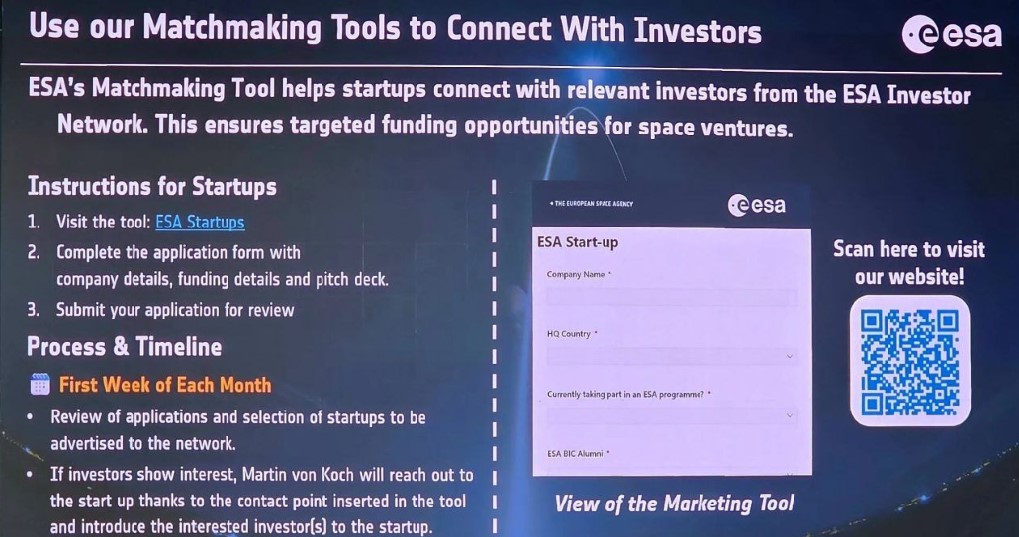
Participants also learned about ESA matchmaking tools that help connect companies with relevant investors from the ESA Investor Network. This is particularly useful for scale-ups looking for targeted funding opportunities rather than general investor outreach.

For Czech companies, this is valuable because it creates another route to European investors who are already familiar with ESA programmes, space technologies and the long development cycles often associated with deep-tech innovation.

Practical cases and the “acceleration gap”

The meeting also presented real company cases showing how businesses can move through the difficult phase between technical validation and commercial success. This phase is often described as the “acceleration gap”, where companies may have a promising technology but still need stronger customer access, investment readiness, procurement experience and scaling capabilities.

Participants heard examples of companies that used ESA support, investor networks, marketplace opportunities and acceleration programmes to move towards commercial growth. These cases are important for Czech companies because they show practical routes from technology maturity to market adoption.

Exchange with ESA Technology Brokers and Phi-Labs (ESA Φ-lab)

The event also provided an important opportunity for direct exchange among ESA Technology Brokers from across Europe. Today, the ESA Technology Broker network brings together around 25 brokers who support technology transfer between the space and non-space sectors through instruments such as ESA Spark Funding, Prepare for Space and ESA Harmonisation. These exchanges are valuable because brokers can share new use cases, successful technology transfer examples, collaboration models and lessons learned from different national markets.

ESA Technology Broker Czechia also gained updated insight into the ESA Phi-Lab network. ESA Phi-Labs support the maturation and commercialisation of innovative technologies through specialised hubs. Each Phi-Lab focuses on a specific technological area, such as robotics, AI, secure communications, Arctic applications or advanced hardware.

Country / ESA Phi-LabESA Phi-Lab focusDeadline
SwedenAI and edge computing; autonomous intelligent space systems.15 June 2026, 14:00
FinlandGeospatial innovation, including sensors, GIS computing, Earth observation, PNT and GNSS.7 September 2026
AustriaUpstream space innovation, including the industrialisation of space hardware and software.TBD
SwitzerlandDeep-tech innovation, including quantum technologies, data science and advanced materials.TBD
SpainSpace-based solutions for climate resilience.TBD
IrelandNext-generation space-optimised hardware.TBD
NetherlandsDownstream space data and technologies for resilient societies.TBD
Norway Space-enabled technologies addressing Arctic needs.TBD
PolandRobotics, AI and autonomy.TBD
United KingdomSpace-enabled sustainability, resilience and environmental sustainability.TBD

Why this meeting matters for Czech companies

Czech technology companies often have strong technical expertise, but they may face challenges when moving from a validated product or service to international commercial growth. The meeting addressed exactly this stage: the period when companies need first large customers, investor access, procurement opportunities, strategic partnerships and visibility in European markets.

For Czech scale-ups, this can mean support in areas such as:

  • finding customers and partners in other ESA Member States via ESA Matchmaking, or describring your profile on ESA Star, attending Space Tech Expo, Czech Space Week, info days about specific missions, attending EUSPA Industry Days, and actively using online matchmaking platforms.
  • accessing investors interested in space-related and deep-tech technologies,
  • using ESA networks to increase visibility via ESA Matchmaking, ESA Harmonisation,
  • identifying funding and procurement opportunities.

Thank you to ESA, AEE, the City of Seville, Indra, the Spanish Commercialisation Network and all members of the European network who made this week such a success. Photo: from Arribes LinkedIn.

Categories
news

Technical Insights into AMPER 2026 – where Industrial Capability Meets Space Potential

AMPER 17-19.3.2026 in Brno was an industrial event in the full sense of the word: automation, control systems, cable assemblies, wireless communication, optical components, testing equipment, special-purpose machinery, and production know-how. For us at ESA Technology Broker Czechia, Technology Centre Prague, that matters more than any generic innovation narrative, because most technologies with real transfer potential into space do not start life inside a classic aerospace company. They start in factories, test labs, embedded systems teams, and specialised manufacturing environments.

Our role as ESA Technology Brokers is not just to identify technical capabilities that could survive the jump into a more demanding application domain — or, in the opposite direction, to identify where space-driven engineering can create value in terrestrial industry. In practice, that means looking beyond the exhibitor’s market label and focusing instead on the engineering substance: sensing, control architecture, reliability, materials behaviour, production tolerances, modularity, embedded integration, testability, and long-term operational stability.

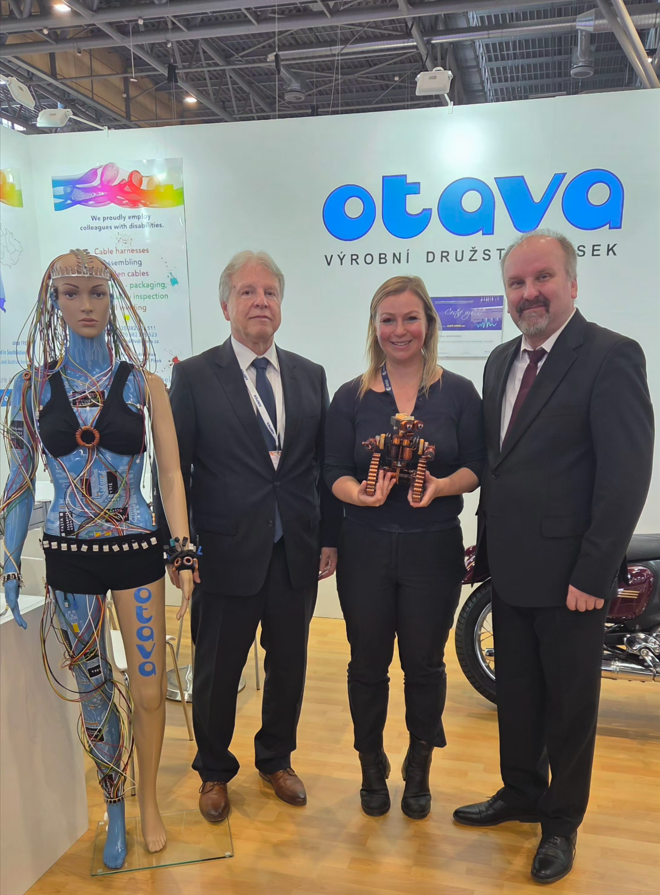
This became very clear in conversations with Radek Balušek, representatives of ELAP, Josef Habart from OTAVA, Jan Rott and Leo Doseděl from the Union of Czech and Moravian Production Cooperatives, Helena Krutská from ECOGLASS, and Jan Vašta from MICRORISC. They pointed to several concrete technical areas that matter if you are thinking seriously about future space and dual-use applications: industrial automation, cable harnessing, coil production, optical design, precision glass forming, wireless mesh communication, embedded electronics, and industrial inspection systems.

Take ELAP. What they describe is not generic “automation” in the trade-fair sense, but a stack of capabilities that is technically interesting: control systems for machines and process units, custom production lines, inspection and testing equipment for quality assurance and dimensional stability verification, robotic and handling workstations, and special-purpose machines built to customer requirements. They also mention temperature-control systems, monitoring of operating-fluid consumption, and energy-saving process equipment. From a broker’s perspective, this is exactly the sort of portfolio that deserves a closer look. Not because it is already space-qualified, obviously, but because the engineering logic is relevant: closed-loop control, repeatable handling, special-purpose automation, process monitoring, and test systems are all areas where terrestrial know-how can sometimes be adapted into high-reliability environments.

OTAVA is interesting for a different reason. On paper, cable harnesses, coils, electromechanical parts and Bowden cables may sound less spectacular than AI or optics. In practice, this is where a lot of engineering credibility lives. OTAVA reports long-term manufacturing of cable assemblies, coils, electrical components and control cables, with annual coil output exceeding 700,000 units, and specifically highlighted new developments in cable harnesses and Bowden systems for electrical engineering, automotive and machinery applications. Harnessing, winding, electromechanical integration and repeatable small-part manufacturing are foundational capabilities. In aerospace and space systems, interconnection architecture, routing discipline, manufacturing repeatability and failure prevention are never “secondary”; they are mission-critical.

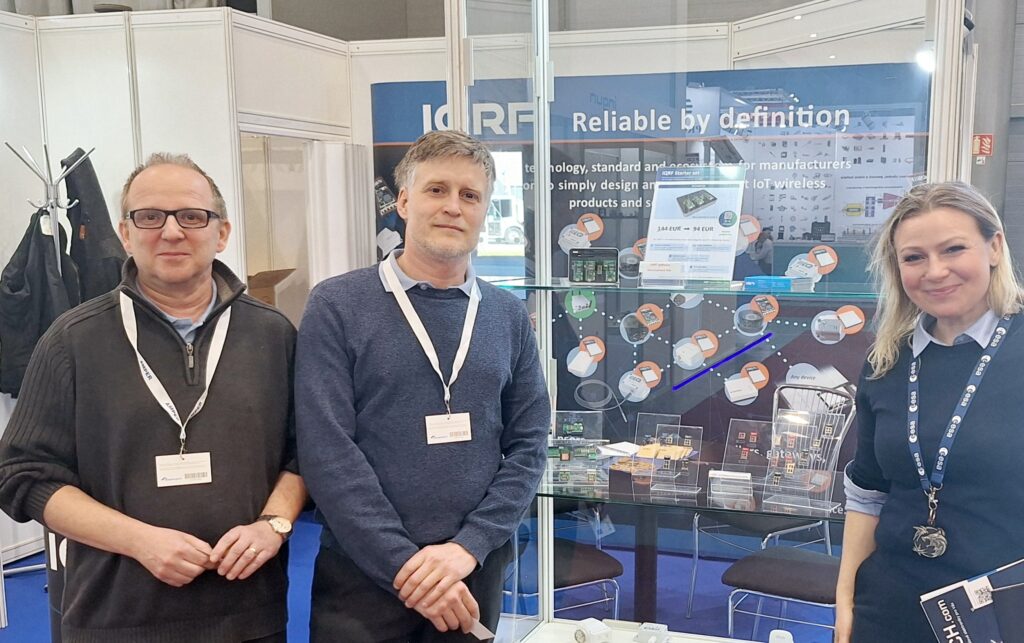
MICRORISC, represented by Jan Vašta, is technically one of the clearest examples of transfer-ready know-how. The company’s profile is explicit: wireless networks, R&D, custom electronics, and embedded integration built around the IQRF wireless mesh technology. MICRORISC describes IQRF as a complete technology stack for adding wireless connectivity and optionally internet connectivity to electronic products, with applications in smart lighting, smart cities, building and industrial automation, energy, logistics, monitoring and healthcare. Beyond that, the company also develops custom control panels, control units, specialised sensors, medical tools and embedded systems. This is important because the real asset here is not just one protocol or one product. It is competence in low-power wireless communication, networked embedded electronics, application-specific hardware design, and the integration of communication into constrained systems, all highly relevant when looking at distributed sensing, remote monitoring, infrastructure autonomy or intelligent subsystem integration.

The photo was taken during the last event.

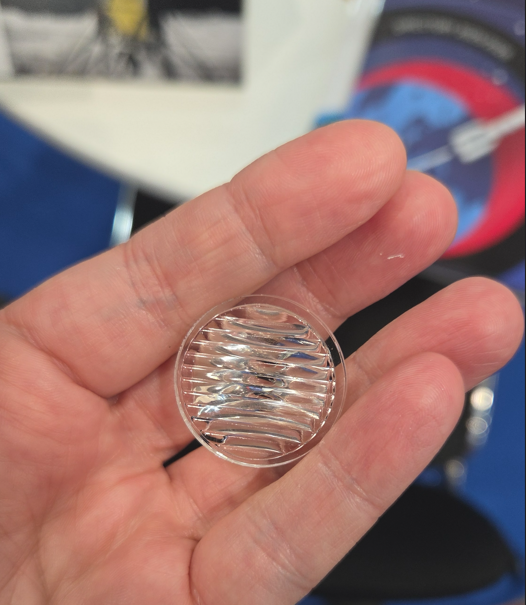
ECOGLASS, with Helena Krutská, is a very different but equally relevant case. Here the core is precision moulded glass optics, especially for lighting applications. Publicly available descriptions point to aspherical lenses, TIR collimators, cavity lenses, Fresnel lenses, prisms, optics for automotive and airfield lighting, and optical components for harsh environments, combined with optical design, photometric measurement, prototyping and serial production. That combination matters. Designing optical performance is one thing; designing optical performance that is manufacturable, repeatable and economically scalable is another. ECOGLASS explicitly positions itself around that interface between optical design and manufacturability. From our point of view, this is exactly the sort of capability space projects often need but do not always develop in-house: robust optical parts with controlled geometry, known production behaviour, and an engineering team that understands both function and process.

The meetings with Jan Rott and Leo Doseděl from SČMVD added another important layer. The Union itself is not a technology developer in the narrow sense; it is an industrial structure that represents a broad base of Czech manufacturing cooperatives. But that is exactly why it matters. SČMVD represents around 180 member cooperatives across sectors including machinery, automated workstations, automotive, plastics and related industrial production. In other words, it is a map of latent capability. For a technology broker, that is strategically important, because space transfer often starts not with a finished “space company” but with a network of smaller manufacturers and specialised engineering firms that already know how to build difficult things well.

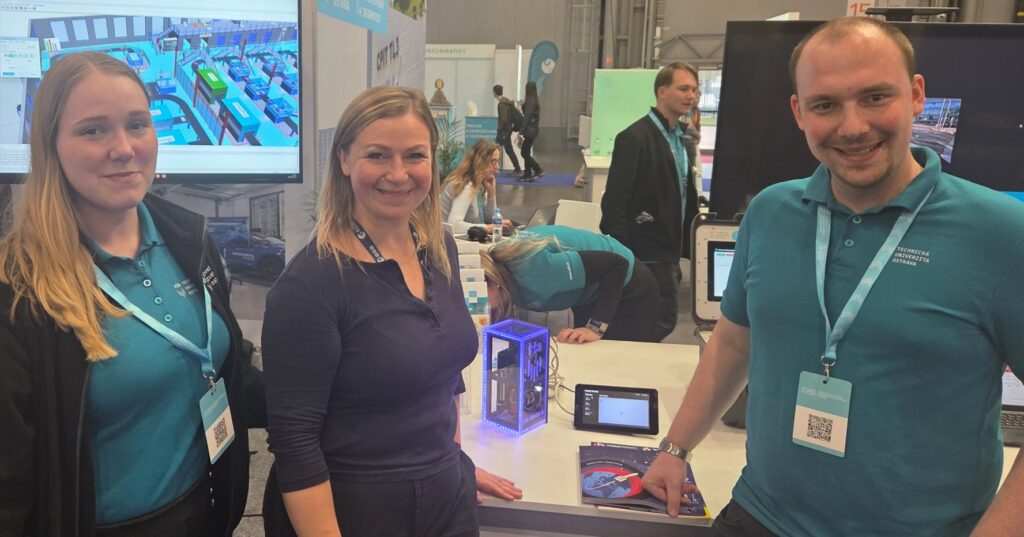
That is also why the academic side mattered so much in Brno. If AMPER showed the industrial base, then the Czech university ecosystem showed where deeper technical specialisation is moving. VŠB-TUO is a strong example: electronics, sensing, AI and human-spaceflight-related research combined in a way that is not theoretical. Their publicly described work includes nanorobot behaviour in microgravity and astronaut stress analysis using voice and sensor data. That is not “space branding”; it is a real combination of sensor fusion, signal analysis, AI-assisted evaluation and mission-relevant physiology.

Seen together, this is what AMPER 2026 really showed us. Czechia has a broad technical base that is already working on many of the right engineering problems: machine control, process automation, test equipment, optical design, embedded communication, cable systems, sensors, data acquisition, harsh-environment components, and specialised manufacturing. The missing step is often not invention. It is translation. Translation from one sector’s requirements into another sector’s application logic.

That translation is our job.

As ESA Technology Broker Czechia, we sit between two engineering cultures. One talks about supply chains, manufacturability and service life. The other talks about qualification, TRL, mission assurance, environmental resistance and system constraints. A good broker has to understand both languages well enough to know when a company’s technology is merely interesting — and when it is actually transferable. AMPER was valuable because it gave us real technical signals, not just promotional ones. It let us see where Czech industrial capability is already mature, where it is adaptable, and where a first serious conversation about space relevance can begin.

Categories
news

Last call: 1–2 seats left for Czech–Austrian Upstream Matchmaking

Only 1–2 slots still available

This in-person matchmaking event is for CEOs and senior decision-makers of Czech upstream space-tech companies who want to meet Austrian partners. Participants should come with one product they aim to scale and explore joint project ideas with an Austrian partner, with the potential to apply together for a future ESA Phi-Lab Austria call.

We currently have only 1–2 remaining spots for Czech companies. Registration is possible by contacting Anna Ruščák, ESA Technology Broker Czechia, at ruscak@tc.cz.

Why participate?

This in-person matchmaking event is designed for companies that want to move beyond networking and into real collaboration. The goal is to:

  • Connect Czech and Austrian upstream companies at CEO and decision-maker level
  • Enable partners to get to know each other in depth
  • Support the joint preparation of a concrete project, with the ambition to scale one specific product or technology
  • Lay the foundation for future consortia applying to upcoming ESA Phi-Lab Austria calls.

What to expect

  • 1 full day of focused interaction
  • 10 company pitches from selected upstream players
  • Unlimited networking opportunities with carefully matched partners
  • Direct access to ESA Phi-Lab Austria, Brimatech, and Technology Centre Prague

The event is intentionally limited in size to ensure high-quality discussions, meaningful partner matching, and sufficient time to explore joint project ideas with real market and scaling potential.

Event details

Czech–Austrian Upstream Matchmaking Day 2026
Connecting Czech and Austrian upstream companies, fostering concrete collaboration

📅 18 March 2026, 9:30-15:30
📍 ESA Phi-Lab Austria, Office Park 2, 1300 Vienna Airport, Austria

Who should register?

  • CEOs / top decision-makers of upstream space technology companies
  • Companies with a clear product or technology ready for further development or scaling
  • Teams motivated to co-develop a joint project with Austrian partners and explore ESA-related opportunities

Austrian companies – planned participants

In addition to current Phi-Lab “Philabees,” the following Austrian upstream entities are expected to participate:

  • RHP Technology – advanced materials, thermal and insulation solutions
  • AAC (Aerospace & Advanced Composites) – material development, testing, and ESA qualification
  • FOTEC – applied R&D, prototyping, testing, and manufacturing technologies
  • Space-Lock – space mechanisms and release systems
  • Testfuchs – aerospace and space testing and validation systems
  • Beyond Gravity – launch vehicle and satellite structural components
  • TTTech – avionics, deterministic networking, and safety-critical systems
  • LCM (Linz Center of Mechatronics) – mechatronic R&D and system design
  • PROFACTOR – manufacturing technologies and automation
  • Silicon Alps Cluster – electronics, microelectronics, and embedded systems ecosystem

These organizations have expressed interest in technology, manufacturing, and R&D cooperation with Czech partners.

Expected contribution from participants

Participation requires active involvement:

  • A 5–7 minute pitch (in English) covering:
    • core technical competencies of the company,
    • one product or technology proposed for further development or scaling,
    • the type of partner or cooperation sought.

The pitch is mandatory and will be used to support structured matchmaking.

Categories
news

Inside CASSINI Entrepreneurship Days 2025, Prague

Key takeaways from CASSINI Entrepreneurship Days 2025 in Prague: EU space startups, EUSPA technical insights, and investor-ready roadmaps

CASSINI Entrepreneurship Days 2025 in Prague brought together startups using space-enabled tech. Five were from Czechia; the rest represented Germany, Finland, Denmark, and other EU countries. Solutions focused on real operational needs: plant-growth monitoring, terrain and infrastructure surveillance (including rail tracks), strong laser network for space debris, and a notable water-borne drone with a self-recharging wind generator for extended deployments. ESA Technology Broker Czechia at Technology Centre Prague appreciates the personal invitation from Jana Kominek Večerková (EUSPA) and the constructive engagements throughout the day. The CASSINI and European space ecosystems came together as EUSPA, in partnership with EUDIS, hosted a standout event featuring 400+ participants, multiple panels and pitching sessions, and keynotes from space leaders.

Why it Mattered

The event combined three tracks that actually reinforce each other:

  • Showcasing working prototypes and pilots on stands.
  • Matchmaking founders with investors
  • Founders refined short pitches of their companies and solutions.

Technical Depth (the best part)

Conversations with EUSPA experts turned demos into design reviews. A highlight was a discussion with Kati Tahvonen (EUSPA), who—like ESA Technology Broker—has petrochemical and marine industry experience. We focused on:

  • Corrosion and probe design for wind-powered energy modules: corrosion resistance, maintainance, coatings, and failure modes.
  • UAV stability and mission assurance: redundancy, vibration isolation for sensitive payloads, and instrumentation so systems reveal issues early.

The tone was vivid and constructive.

Where conversations got interesting

CASSINI Entrepreneurship Days 2025 in Prague (8–9 October) proved its value as EUSPA’s flagship meetup by combining a curated startup expo, structured investor matchmaking, and expert reviews under one roof. The event’s design—free access, exhibition space, 1:1 meetings, and pitching blocks—kept the focus on practical adoption rather than showmanship. Content emphasized Europe’s strategic priorities in space and defence, with sessions on capital, certification pathways, and the CASSINI Challenges awards anchoring the agenda. For participants, the immediate outcomes were clear: sharper roadmaps, stronger investor–founder fit, and concrete next steps for deployment across Earth-observation and downstream services. In short, it delivered what Europe’s space ecosystem needs most right now: qualified connections, rigorous feedback, and momentum toward field-ready solutions.

Categories
news Uncategorized

ESA Technology Broker Czechia to Participate in Dronedge 2025

The ESA Technology Broker Czechia, based at the Technology Centre Prague, was actively participating in Dronedge 2025 and supporting the ESA Ambassador and ESA BIC. On 2 October 2025, ESA Technology Broker Czechia, together with ESA BIC Czech Republic and ESA Ambassador were informing about ESA support for innovative companies.

Visitors were warmly invited to stop by the ESA Ambassador stand, where they could learn more about how ESA supports startups, innovators, and companies in bringing space technologies into non-space sectors, as well as how drone-related solutions can benefit from ESA’s network, funding, and expertise.

This collaboration underlines ESA’s commitment to fostering innovation, strengthening the Czech aerospace and drone ecosystem, and creating bridges between space technology and practical applications on Earth.

Dronedge 2025 – Program

Location: Fantova budova, Prague Main Railway Station
Theme: Drone Applications in Practice & Security/Defence, Testing Grounds in the Czech Republic, and Technology & Innovation

Morning Session – Applications & Security

  • 09:40 – UAVA
  • 09:45 – E.ON – BVLOS automated line inspections
  • 10:00 – 3L Robotics – drone delivery & helipads
  • 10:10 – SITMP – medical drone delivery
  • 10:25 – Retia – drone detection
  • 10:35 – AMOS – drones in Ukraine: trends & support
  • 10:55 – Czech Army – drones in armed forces
  • 11:15 – LIAZ – unmanned helicopter for diverse use cases
  • 11:25 – Excalibur International – FPV drones & loitering munitions
  • 11:35 – Rescue Trailer – mobile platform for drone operations

Drone Testing Grounds in the Czech Republic

  • 11:45 – Fly in Diamonds (Moravské Budějovice)
  • 12:00 – Sokolovská uhelná / SUAS
  • 12:15 – Veletrhy Brno / BVV – Living Lab
  • 12:30–13:30 – Lunch

Afternoon Session – Technology & Innovation

  • 13:30 – Telink – protection of critical infrastructure
  • 13:45 – Pramacom – Skydio, Parrot & Lockheed Martin drones
  • 14:00 – Quantum Systems/Skymaps – advanced eVTOL drones
  • 14:15 – Geotronics Praha – WingtraRAY & C3, C6 compliance
  • 14:30 – Airvolute/Skymaps – autopilots & accessories
  • 14:45 – Texxar – UAV geophysics & dual use
  • 15:05 – HP/3Dees – 3D printing for UAV components
  • 15:20 – Flapper Drones – bioinspired flying drone
  • 15:30 – DroneVision – mapping & digitalization from drones

Categories
news

ESA Technology Brokers Engage with Czech Innovators in Brno

On June 10, 2025, the ESA Technology Broker for Czechia participated in two key events in Brno, both focused on expanding awareness and engagement with space technologies, Earth observation, and collaboration opportunities with the European Space Agency (ESA).

URBIS The Smart Cities Meetup 2025

Held at the Brno Exhibition Centre (BVV), URBIS showcased new technologies for smart cities. As ESA Technology Broker, we explored innovative sensor technologies and applications of satellite data that have strong potential for space and terrestrial synergy.

Among the exhibitors, several companies presented advanced sensor systems highly relevant for urban planning and environmental monitoring. For instance:

  • Sensority s.r.o. demonstrated environmental sensor platforms for air quality and noise monitoring.
  • Flowbox showcased energy and water monitoring systems powered by AI and real-time data analysis.
  • TopGis and GEOVAP presented solutions leveraging satellite imagery and remote sensing data for high-resolution terrain mapping, infrastructure planning, and city development.

These applications align closely with ESA’s Earth Observation programmes and open pathways for dual-use innovations between space and smart city solutions.

ESA Technology Broker, ESA Ambassador and Regional Coordinator for Technology Incubator

ESA Academia Info Day at Brno University of Technology (VUT)

On the same day, from 13:00 to 15:30, ESA Technology Broker Czechia and ESA BIC Brno held a seminar at the Rectorate of VUT, aimed at researchers and academic institutions. The session, titled “Opportunities in the ESA Programme”, introduced ways Czech universities and R&D teams can engage with ESA initiatives.

Key Highlights:

  • Co-funding through ESA BIC Brno for space-tech startups and spin-offs (up to €50,000).
  • Co-funding through ESA Technology Broker support for tech transfer and commercialization (up to €75,000).
  • Overview of ESA’s Open Space Innovation Platform (OSIP) for submitting breakthrough ideas.

Special Focus Areas:

  • Spectrum Sharing Makerspace: Grants of €15,000–€20,000 for spectrum-related projects.
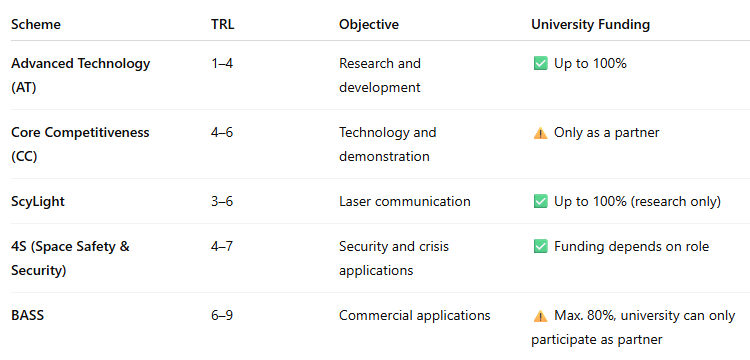
  • ESA ARTES Programme: Funding schemes supporting telecom innovations (TRL 1–9), including:

Other Support Programs:

  • ESA GSTP: Prototype and demonstration support (TRL 3–6), coordinated by the Czech Ministry of Transport.
  • Lift-Off Challenge: National contest (CZK 60,000 prize) for early-stage teams to develop and pitch space-based ideas.

The seminar equipped participants with practical tools for turning research into real-world space and commercial applications. If you’re developing a sensor, data platform, or novel technology with space relevance, contact us—ESA is here to help accelerate your innovation.

The ESA Technology Broker’s role is to connect Czech companies, researchers, and institutions with ESA technologies, expertise, and funding mechanisms. Our presence at both URBIS and the VUT seminar reflects our commitment to strengthening ties between academia, industry, and the European space ecosystem.

If your organization is developing a novel sensor, data application, or technology with space potential—or if you’re looking for ways to adapt space technologies to Earth applications—contact us. Let’s explore how ESA can help accelerate your innovation.

Categories
news Uncategorized

AMPER 2025: A Look Back at Gold Amper and New Innovations in Electronics and Mobility

The AMPER 2025 exhibition, held from 18th March to 20th March at the Brno Exhibition Centre, was an exhilarating hub of innovation, showcasing advancements in electrical engineering, electronics, and renewable energy technologies in the region. As the ESA Technology Broker, we were on a quest for technologies with space heritage or innovative inventions applicable to space. One of the standout moments of AMPER 2025 was the highly competitive Gold Amper contest, where 22 exhibitors showcased their inventions across various fields, including automotive technology, drones, and more. Among the participants were talented inventors from the Czech Republic, Poland, and Germany, reflecting a vibrant exchange of ideas and expertise. This year’s event was smaller, making it a greater challenge to discover inventions that could be useful for space applications. Nevertheless, the exhibition was bustling with new prototypes, many of which received the prestigious Golden Amper.

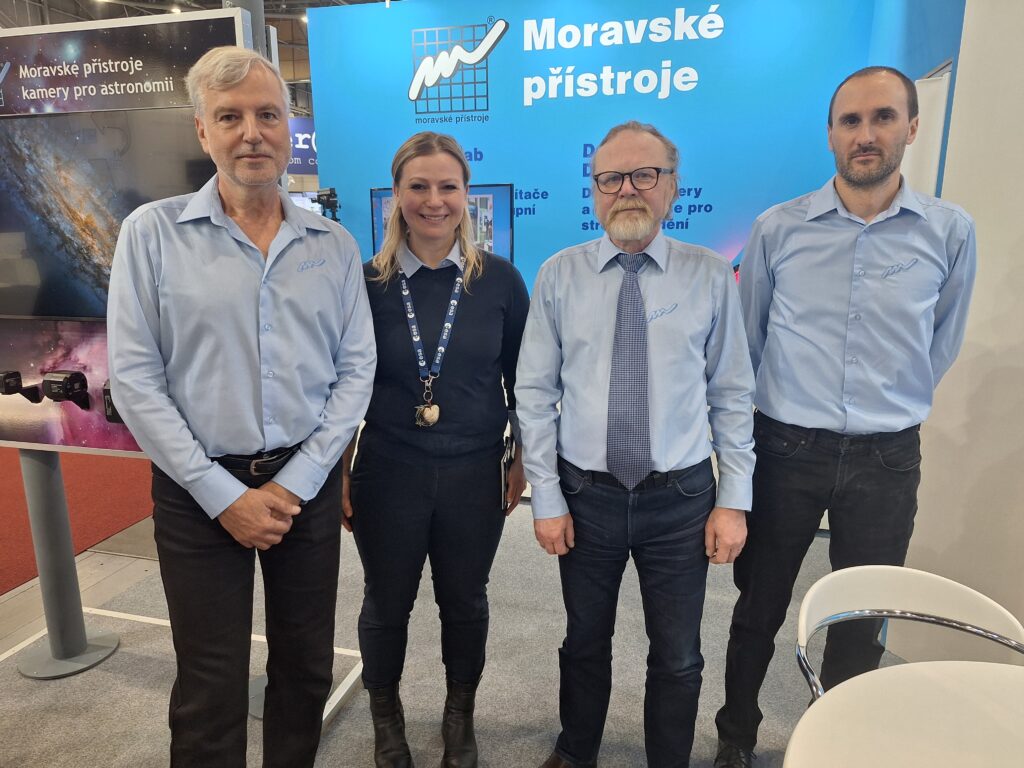
Moravian Cameras has a track record of delivering quality space cameras.

Celebrating the Gold Amper Winners 🏆

The Gold Amper Awards serve as a prestigious recognition of innovation in the fields of electronics and technology, celebrating both corporate entities and aspiring student inventors. The recent AMPER 2025 competition showcased a multitude of groundbreaking products and ideas, underlining the event’s commitment to excellence and creativity.

Golden AMPER has been rewarded to:

🏆BD SENSORS s.r.o. – awarded for their contributions to sensor technology, enhancing measurement accuracy in various applications.

🏆CEITEC – Central European Institute of Technology, VUT Brno -Recognized for significant research advancements in the field of electronics and technology at one of the leading tech institutes.

🏆Compleo – Honored for innovative solutions in electric vehicle charging infrastructure, promoting sustainable transport solutions.

🏆Fakulta elektrotechnická ZČU | RICE– Acknowledged for their compact electric drive technology designed for extreme conditions, showcasing advancements in electric mobility.

🏆ENIKA.CZ– Awarded for their smart home solutions, integrating modern technology into everyday life for improved energy management.

Big congratulations to all winners for their unique solutions.

Introducing the Student Category: The Student Golden Amper

This year’s competition saw the introduction of a new category specifically for student inventions—the Student Golden Amper. This addition highlights the importance of nurturing young talent within the technology sector, providing students with a platform to present their innovative ideas alongside established companies. This initiative aims to inspire the next generation of engineers and technologists.

Recognizing Innovation

The winning products in the Gold Amper competition were noteworthy for their potential to redefine industry standards. These inventions promise improvements in energy efficiency, safety, and technological integration across various sectors. The top students awardees included:

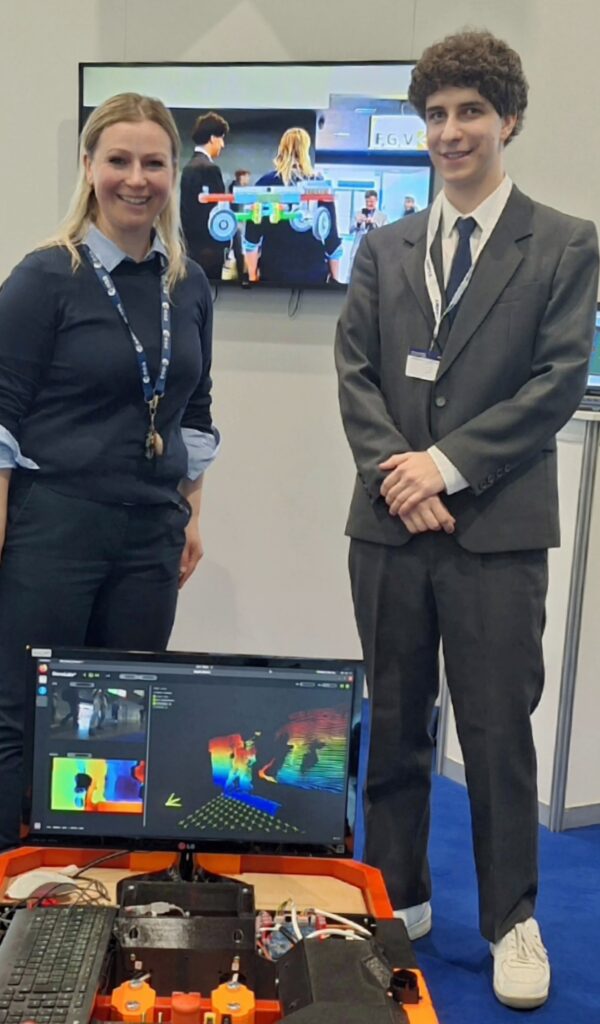
  • 1st Place: for the Mobile Robotic Platform with Independent Wheel Control, showcasing significant advancements in robotics designed for detecting the source of water or gas leakage at depths of up to 100 meters (see picture above).
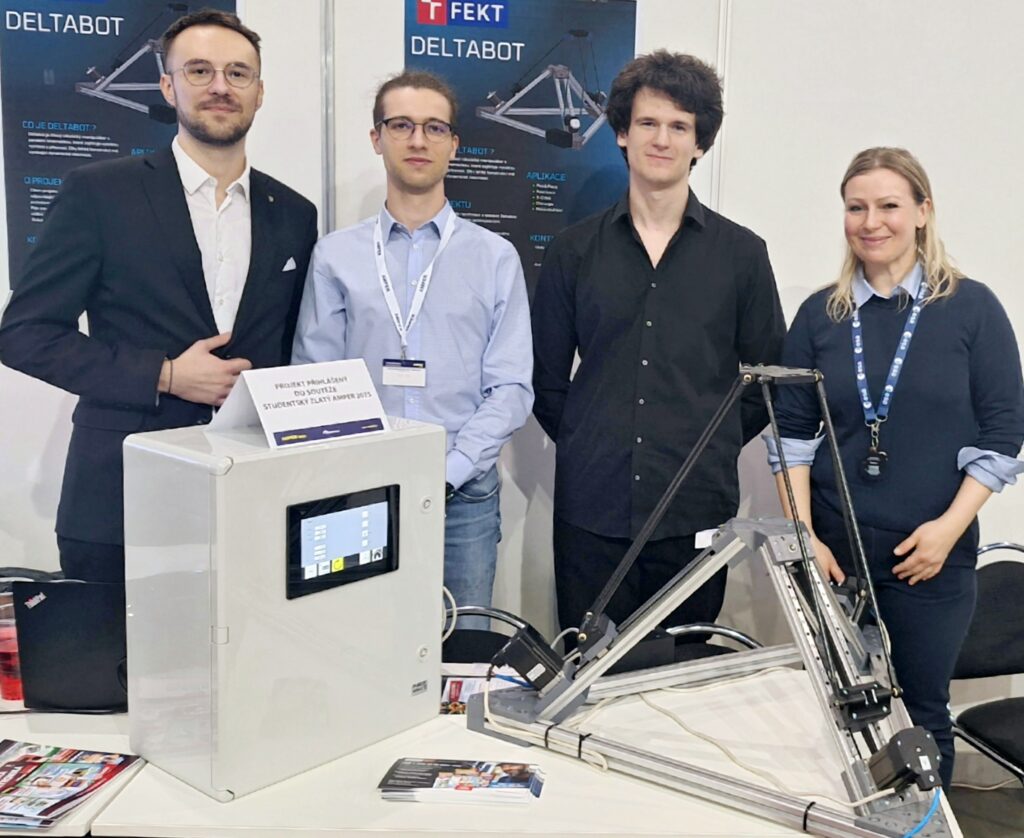
  • 2nd Place: Kryštof Doležal for the Deltabot, which highlights innovative applications of automation (under).

In addition to the winners, numerous other noteworthy competitors presented remarkable solutions. Notable entries included:

  • LCT 307i RS 485 by BD SENSORS s.r.o., a combined sensor for enhanced monitoring.
  • Eberle s.r.o.: PQI-Dasmart, a new power quality analyzer capable of diagnosing electrical faults.
  • Compleo Charging Solutions GmbH: eTower 200, an intelligent charging station designed to maximize efficiency.
  • Dräger Safety s.r.o.: Dräger X-node, a wireless gas detection system enhancing industrial safety.
  • Omron Electronic Components Europe BV: OMRON G9KC, a high-power relay designed for demanding applications.
  • Rajapack s.r.o.: GrasiKraft paper, an innovative sustainable material made from grass, emphasizing environmental responsibility.

IQRF suprised with their well-though wireless Mesh solutions

A Diverse Array of Innovations

Other valuable entries included:

  • Multicar M25 EL, an electric drive vehicle by Aerovka, s.r.o., promoting sustainable transportation solutions.
  • Automatic PCB Board Inspection by Vision Systems, s.r.o., which improves manufacturing efficiency.

Diverse Innovations and Exhibition Highlights

Reflecting on my experiences at AMPER, I noticed a significant focus on electronic components and automotive technologies this year. The exhibition halls were packed with innovative displays from local and international companies, particularly in Hall F, which was dedicated to electronic components and modules. Key categories featured in the exhibition included:

  1. Electromobility: With growing concerns about the environment, the sector saw innovations from companies like Daimler Truck Czech Republic, showcasing models like the eEconic, and Tesla Czech Republic, presenting their groundbreaking vehicles such as the Cybertruck.
  2. Safety Equipment: Engaging demonstrations of innovative safety technologies were abundant, showcasing systems capable of detecting and adapting to emergency conditions.
  3. Smart City Solutions: The appeal of smart city innovations was evident throughout the exhibition, with companies unveiling system designs that promise to enhance urban life through improved connectivity and energy management.
  4. Drones and Robotics: The increasing relevance of drones and automation technologies was highlighted at stands such as DronPro, which presented autonomous solutions for industrial applications.

Exhibitors from Central Europe

A substantial portion of the exhibitors hailed from the Czech Republic, complemented by notable participants from Poland, Germany, and Italy, making it a truly international affair. Czech innovations were particularly impressive, reflecting the region’s commitment to technology and sustainability.

For instance, leading companies such as Dräger Safety presented their robotic systems, which enhance operational safety in hazardous environments. Moreover, projects from local universities and start-ups showcased cutting-edge research and innovations targeted at shaping future industries.

Future Prospects

Overall, while AMPER 2025 was indeed smaller than past iterations, it was abundant in innovation and collaboration. The gathering of diverse talents and forward-thinking companies provided a promising outlook on how technology, particularly in the realm of electronics, will continue to shape our lives, addressing both current challenges and future needs. The Gold Amper awards epitomized this spirit of innovation and fostered a community dedicated to excellence in the fields of electronics and electrical engineering.

Importantly, the contributions of present companies to organizations like ESA, NASA, and SpaceX underscore the critical role that electronics play in the space sector. As we look to the future, the insights and experiences gained from AMPER 2025 will undoubtedly inspire further advancements at the intersection of electronics, sustainability, smart technologies, and space exploration.

Categories
news

Bringing Space Innovation to Earth: ESA Technology Broker at AMPER 2025

The ESA Technology Broker, represented by the Technology Centre Prague, will be actively participating in AMPER 2025, the largest international trade fair for electrical engineering and electronics in the Czech Republic and Slovakia. The event will take place from March 18 to 20, 2025, at the Brno Exhibition Centre.

Our primary mission at AMPER 2025 is to: identify promising technologies with potential applications in the space sector. We aim to discover at least 5 innovative technologies and define 5 technology needs that could benefit from space applications. In addition, we seek to connect with a company eligible for potential ESA Spark Funding and explore facilitation opportunities for collaboration with the European Space Agency (ESA).

Through our engagement at AMPER, we will inform Czech companies about ESA grants, funding opportunities, and pathways to collaborate with ESA on cutting-edge projects. Our goal is to bridge the gap between terrestrial and space technology applications, ensuring that Czech innovations contribute to the growing space economy.

What AMPER 2025 Offers

AMPER 2025 is a high-profile event featuring a range of key programs, including:

  • Golden AMPER Competition – Recognizing outstanding technological innovations.
  • AMPER Summit – A platform for industry experts and thought leaders.
  • Higher Education Innovator – Showcasing groundbreaking academic research.
  • AMPER Startup – Highlighting emerging companies with disruptive technologies.
  • AMPER E-Mobility – Focusing on advancements in electric transportation.
  • Professional Conferences – Covering the latest trends in electrical engineering, automation, and photonic technologies.

With over 23,000 visitors, 410 exhibitors from 23 countries, and an extensive exhibition space of 20,000 square meters, AMPER 2025 presents a unique opportunity for networking and knowledge exchange.

We invite Czech companies to meet us at AMPER 2025 to explore collaboration opportunities, learn about ESA funding programs, and discuss potential applications of their technologies in space. Let’s harness the power of innovation together and push the boundaries of technology beyond Earth!

For more information about AMPER 2025, visit www.amper.cz.

Categories
news

ESA Technology Broker’s Participation at FutureNAV Industry Day 2025: Bridging Czech Innovation with European Space Initiatives

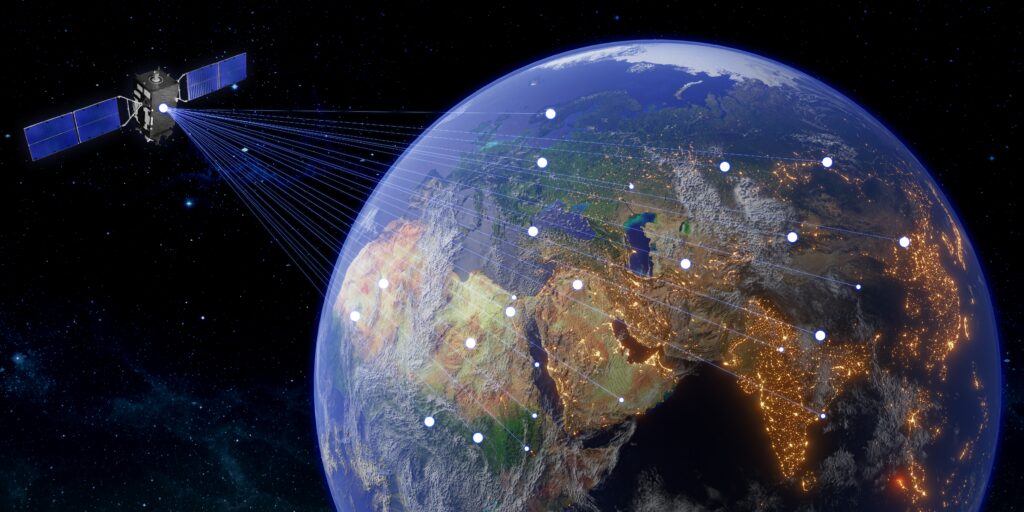
In recent years, the landscape of satellite navigation and communication has transformed, fostering new possibilities and challenges for industries worldwide. As the European Space Agency (ESA) embarks on a strategic journey to enhance Positioning, Navigation, and Timing (PNT) technologies through its FutureNAV initiative, the participation of stakeholders, including ESA Technology Broker Czechia, in key events like the FutureNAV Industry Day 2025 becomes paramount.

The Significance of FutureNAV Industry Day 2025

Scheduled for 18 February 2025, the FutureNAV Industry Day serves as a premier networking and knowledge-sharing platform, bringing together key players in the PNT and Global Navigation Satellite Systems (GNSS) sectors. The event aims to highlight emerging opportunities, discuss innovative concepts and technologies, and establish collaborations among industry representatives, researchers, and ESA officials.

ESA’s Commitment to Innovation

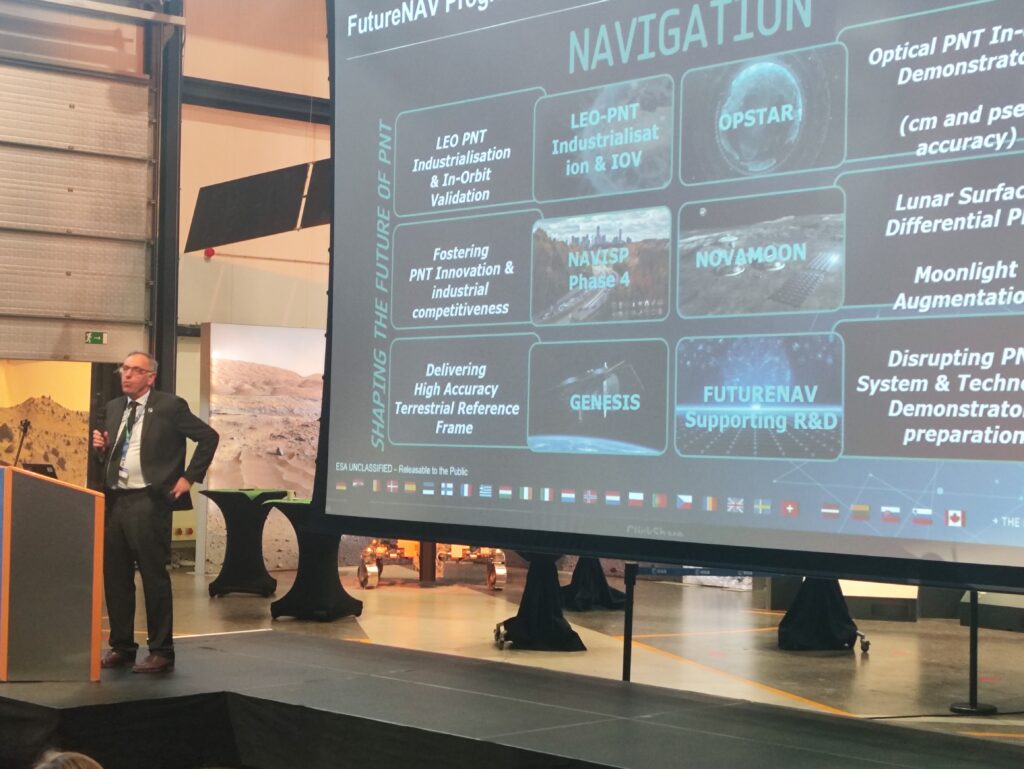
ESA holds a pivotal role in the satellite navigation domain, providing vital systems management, such as the Galileo and EGNOS systems. The agency has launched the FutureNAV program to respond to the evolving market dynamics and challenges presented by new technological advancements. By consolidating initiatives like LEO-PNT, aimed at low Earth orbit navigational satellites, and the Genesis mission, which integrates diverse geodetic techniques into a single satellite, ESA is positioning Europe at the forefront of satellite navigation innovation.

At the FutureNAV Industry Day, ESA will unveil plans regarding these programs, including potential opportunities for European industry stakeholders. Participants will have exclusive access to ESA’s roadmap and R&D priorities, aimed at fostering greater collaboration and technological advancement.

Czech Participation: A Model of Innovation and Collaboration

ESA Technology Broker CZ, acting as a crucial link for Czech enterprises, plays an instrumental role in facilitating the involvement of local companies in ESA initiatives. The recent participation of Czech companies at the FutureNAV Industry Day signifies the strong potential for collaboration in satellite-based technologies, especially for ground receiving stations.

In recent years, the landscape of satellite navigation and communication has transformed, fostering new possibilities and challenges for industries worldwide. As the European Space Agency (ESA) embarks on

Networking with Industry Leaders

Czech firms, particularly those specializing in ground station technologies, have much to gain from engaging with leading voices in the European satellite navigation sector. The event will provide invaluable networking opportunities with industry heavyweights and ESA experts, which is essential for fostering innovation and practicality in technology design and implementation.

ESA Technology Broker CZ’s proactive involvement ensures that Czech firms can identify technological intersections with ESA’s portfolio, mapping out pathways for collaboration and participation in future projects.

Strategic Focus Areas and Future Engagement

ESA Technology Broker CZ is keen on monitoring upcoming activities from ESA, signaling a dedicated focus on tracking relevant technology trends and R&D priorities. By identifying areas of synergy between its portfolio and ESA initiatives, the Technology Broker is well-positioned to assist Czech companies in engaging with ESA’s FutureNAV program.

Several critical areas warrant attention:

  1. LEO-PNT Industrialisation: Insights into European production capabilities for payload building blocks will drive the future of low Earth orbit navigational systems.
  2. In-Orbit Demonstrations: ESA’s focus on in-orbit validation of innovative technologies will necessitate collaboration with tech providers in Czechia.
  3. Research and Development: Continuous R&D is vital for the evolution of PNT technologies and their applications in various sectors.

Conclusion

The FutureNAV Industry Day 2025 promises to be a pivotal event that will shape the trajectory of satellite navigation in Europe. ESA Technology Broker CZ’s commitment to integrating Czech innovation within European space initiatives highlights the growing importance of international collaboration in advancing PNT technologies. By engaging with ESA and exploring mutual interests, Czech companies stand to leverage opportunities that not only enhance their technological capabilities but also contribute significantly to the broader framework of satellite navigation and communications across Europe.

As we approach the day of the event, anticipation mounts for the collaborative ventures that will arise from these gatherings, signaling a bright future for satellite navigation technologies driven by ingenuity and partnership.

Categories
news

Info-Day of ESA support for innovation and business development

Along with the announcement of the next Spark Funding call, ESA Technology Broker is jointly organizing another Info-Day with ESA BIC Czech Republic and ESA Business Applications Ambassador (ESA BASS).

Together we will go through several of European Space Agency (ESA) programmes offered to help companies develop new space technologies or exploit existing ones. Start-ups, established companies, universities or lone innovators can receive support – but there is a different programme for each.

To help you navigate through these ESA programmes and choose the best one for you, ESA Technology Broker, ESA BIC Czech Republic and ESA Business Applications Ambassador will explain the details and conditions of the ESA Spark Funding, ESA BIC and ESA BASS programmes. This main part of the agenda will be held in Czech language. There will also be time to discuss your specific plans.

The Info Day will take place on 12 June at 9:00 am at the CzechInvest Agency in Prague. You can also participate online via the MS Teams platform. In that case, you will receive the teleconference link before the event.

To attend the Info Day, please register by filling in this form

ESA Spark Funding supports technology transfer from the space sector to the non-space sector. It offers €75,000 to SMEs, start-ups and research organisations for the adaptation of space technologies. The upcoming application deadline is September 5th.

ESA BIC offers support to start-ups up to five years old to help them get their business off the ground. Through ESA BIC, start-ups can receive up to €200,000 in financial support, mentoring and training, office facilities and access to valuable contacts in the space industry and beyond. The upcoming application deadline is September 5th.

ESA Business Applications and Space Solutions Programme (BASS) offers funding and support to businesses from any sector who intend to use space (satellite navigation, earth observation, satellite telecommunication, space weather, space technologies) to develop new commercial services. Applications are open all year. Businesses can submit a proposal at any time through the Call for Proposals for Downstream Applications or can apply to a Competitive Tender or a non-competitive Thematic Call for Proposals.