
Categories
news

Czech and Austrian Upstream Space Companies Meet in Vienna for 40 Matchmaking Sessions and New Partnership Opportunities

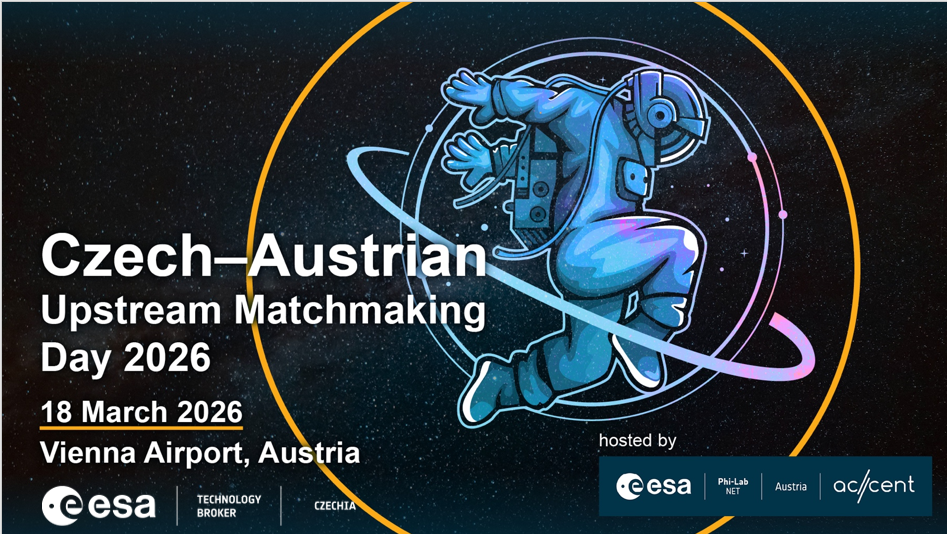
On 18 March 2026, Vienna hosted the 1st Czech–Austrian Upstream Matchmaking Day, a focused international event created to bring together Czech and Austrian upstream space companies with one clear objective: to connect decision-makers, showcase upstream products ready for scale-up, and create the foundations for future projects. The event was an initiative of ESA Phi-Lab Austria, ESA Technology Brokers Austria (Brimatech) and ESA Technology Broker Czechia (Technology Centre Prague).
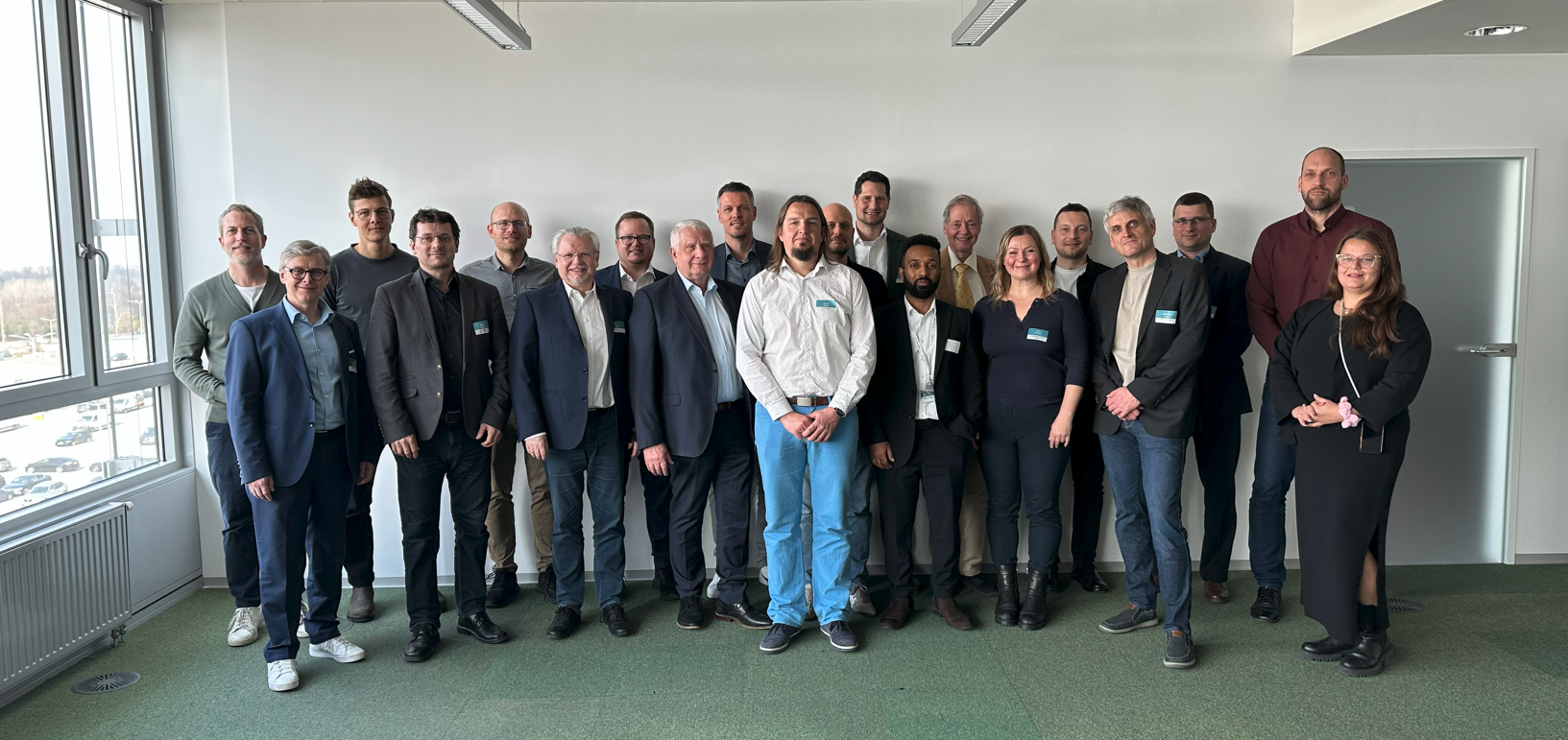
Held at ESA Phi-Lab Austria in Vienna Airport’s Office Park, the event was tailored to CEOs, decision-makers from Austrian and Czech upstream technology companies. The format was deliberately practical: short company pitches were followed by structured matchmaking sessions, allowing participants to present their core technical strengths, highlight the products or technologies they are ready to scale up, and identify the kind of partner they are seeking.

The day delivered exactly that. According to the matchmaking table, a total of 40 bilateral meetings took place during the event. That number alone reflects the high level of interest on both sides, but more importantly, it points to something bigger: a strong appetite for Czech–Austrian collaboration in upstream space technologies. Discussions were open, constructive and business-oriented, with participants actively exploring where their expertise, products and ambitions could align.
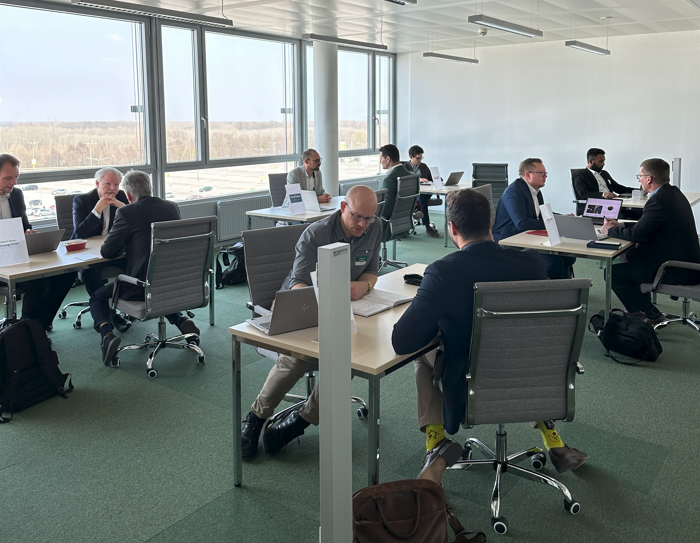
What made the event particularly valuable was its practical focus. This was not a general networking gathering, but a carefully structured opportunity for companies to present their strengths, explain which technologies they want to scale up, and clarify what type of partner or collaboration they are seeking. According to the official agenda, the company pitch session was specifically designed around core technical strengths, key products or technologies for scale-up, and the kinds of partnerships companies hoped to build.

That forward-looking perspective is especially important in light of the current ESA Phi-Lab Austria Open Call for Proposals. With funding available for scaling up upstream product projects, the Vienna matchmaking day came at exactly the right moment. For Czech companies, the discussions started during the event may now develop into concrete cooperation pathways, whether through joint applications with Austrian partners or through other forms of cross-border collaboration that create strong value for Austria.

In that sense, the event was more than a successful networking day. It was a starting point for future Czech–Austrian partnerships in the European space sector. It created space for serious conversations, helped companies identify complementary strengths and provided a timely framework for follow-up around upcoming funding and project opportunities.

The organisers now hope that the momentum generated in Vienna will continue in the weeks ahead. Companies are encouraged to stay in touch, continue the conversations initiated during the matchmaking sessions and explore how their first meetings can evolve into long-term cooperation, joint development activities and strong Czech–Austrian consortia.
Categories
news

Up to €75,000 from ESA: Join the ESA Spark Funding Info Day (Online, 3 March)

This invitation is for Czech high-tech companies and universities—especially CEOs, CTOs, R&D managers, and technical decision-makers—who develop their own technologies and are considering their next technical and commercial steps. You are warmly invited to an online Information Day for ESA Spark Funding.

The programme offers up to €75,000 to support a new or improved product, know-how, or service based on space technologies or transfer of space technologies into terrestrial applications. Registration details are here.

Date & time: 3 March 2026, 10:00 (online) in Czech

During this one-hour session, we will focus only on topics relevant for organisations that are seriously considering submitting a proposal:

  • whether your technology is eligible (technically and formally),
  • how to correctly define a space technology transfer,
  • how to structure a project so it is technically strong, realistic, and clearly evaluable by ESA.

We will also walk through practical examples where ESA Spark Funding is most relevant, including:

  • advanced materials and coatings,
  • thermal management,
  • sensors and measurement systems,
  • reliable electronics, validation, and testing.

Goal of the session: after one hour, you should clearly understand whether Spark Funding fits your organisation, how to define a strong technical use case, and which common proposal pitfalls to avoid.

There will also be time for technical questions. Q&A capacity is limited, so early registration is recommended.

Categories
news

Connecting Czech Innovation to ESA Harmonisation

ESA Technology Broker Czechia from Technology Centre Prague participated in the European Space Technology Harmonisation 2026 – Cycle 2 Kick-Off event on 5 February 2026. The kick-off introduced the Cycle 2 technology areas where ESA is gathering input and identifying capabilities across the European ecosystem through the Technology Harmonisation Dossiers (THDs) process—including contributions from companies outside the traditional space sector.

The Cycle 2 topics covered:

  • On-Board Computers, Data Handling Systems and Microelectronics
  • Radiation Environment and Effects
  • Ground Station Technology
  • Avionics Embedded Systems
  • On-Board Software

As ESA Technology Broker Czechia, our role is to connect non-space companies with these ESA needs—helping them engage in the harmonisation process and contribute relevant solutions, know-how, and innovations to the THDs.

Categories
news

Apply for ESA Spark Funding

Do you want to take your innovative projects to the next level?

We invite Czech companies to participate in the ESA Spark Funding technology transfer support program.

Main benefits of the program:

  • Leverage space technologies: Incorporate advanced space technologies such as materials, communication systems, sensors, and more into innovative products in your industry.
  • Secure co-funding of €75,000 for your project.
  • Speed up your project: The funding can cover costs for prototyping or expenses for market entry.
  • Support for small and medium-sized enterprises and startups: The ESA Spark Funding program is tailored for technology-oriented small and medium-sized enterprises and startups.
  • Quick completion: The program is focused on projects lasting 6 to 12 months.

Important information:

  • Application deadline: March 20th, 2026, at 23:59 CEST.
  • How to apply: Submit your filled application form via email to SparkFunding@tc.cz.
  • We will select one project; the one with the highest score wins.
  • Frequently Asked Questions and more information are here.

Don’t miss this opportunity to leverage space technologies and innovate your business!

Questions? Concerns? Contact us on SparkFunding@tc.cz.

Categories
news

Last call: 1–2 seats left for Czech–Austrian Upstream Matchmaking

Only 1–2 slots still available

This in-person matchmaking event is for CEOs and senior decision-makers of Czech upstream space-tech companies who want to meet Austrian partners. Participants should come with one product they aim to scale and explore joint project ideas with an Austrian partner, with the potential to apply together for a future ESA Phi-Lab Austria call.

We currently have only 1–2 remaining spots for Czech companies. Registration is possible by contacting Anna Ruščák, ESA Technology Broker Czechia, at ruscak@tc.cz.

Why participate?

This in-person matchmaking event is designed for companies that want to move beyond networking and into real collaboration. The goal is to:

  • Connect Czech and Austrian upstream companies at CEO and decision-maker level
  • Enable partners to get to know each other in depth
  • Support the joint preparation of a concrete project, with the ambition to scale one specific product or technology
  • Lay the foundation for future consortia applying to upcoming ESA Phi-Lab Austria calls.

What to expect

  • 1 full day of focused interaction
  • 10 company pitches from selected upstream players
  • Unlimited networking opportunities with carefully matched partners
  • Direct access to ESA Phi-Lab Austria, Brimatech, and Technology Centre Prague

The event is intentionally limited in size to ensure high-quality discussions, meaningful partner matching, and sufficient time to explore joint project ideas with real market and scaling potential.

Event details

Czech–Austrian Upstream Matchmaking Day 2026
Connecting Czech and Austrian upstream companies, fostering concrete collaboration

📅 18 March 2026, 9:30-15:30
📍 ESA Phi-Lab Austria, Office Park 2, 1300 Vienna Airport, Austria

Who should register?

  • CEOs / top decision-makers of upstream space technology companies
  • Companies with a clear product or technology ready for further development or scaling
  • Teams motivated to co-develop a joint project with Austrian partners and explore ESA-related opportunities

Austrian companies – planned participants

In addition to current Phi-Lab “Philabees,” the following Austrian upstream entities are expected to participate:

  • RHP Technology – advanced materials, thermal and insulation solutions
  • AAC (Aerospace & Advanced Composites) – material development, testing, and ESA qualification
  • FOTEC – applied R&D, prototyping, testing, and manufacturing technologies
  • Space-Lock – space mechanisms and release systems
  • Testfuchs – aerospace and space testing and validation systems
  • Beyond Gravity – launch vehicle and satellite structural components
  • TTTech – avionics, deterministic networking, and safety-critical systems
  • LCM (Linz Center of Mechatronics) – mechatronic R&D and system design
  • PROFACTOR – manufacturing technologies and automation
  • Silicon Alps Cluster – electronics, microelectronics, and embedded systems ecosystem

These organizations have expressed interest in technology, manufacturing, and R&D cooperation with Czech partners.

Expected contribution from participants

Participation requires active involvement:

  • A 5–7 minute pitch (in English) covering:
    • core technical competencies of the company,
    • one product or technology proposed for further development or scaling,
    • the type of partner or cooperation sought.

The pitch is mandatory and will be used to support structured matchmaking.

Categories
news

How to prep for an ESA Spark Funding defense?

On 20 January, shortlisted applicants will step into the ESA Spark Funding defence: a fast, focused pitch of 10 minutes, followed by 5 minutes of Q&A. By the time you enter the room (or join online), the evaluation board will already have read your proposal—so the defence isn’t a repeat of every detail. It’s your chance to re-cap the essence with confidence and make the panel feel that your project is real, feasible, and commercially relevant.

Your jury will typically include representatives from ESA Technology Broker Czechia, local authorities from the Ministry of Transportation, and ESA’s Commercialisation team—and may also include an industry expert. This mix matters: you’re not only speaking to technical evaluators, but also to people who will challenge your market logic, customer credibility, and delivery readiness.

In those 10 minutes, your mission is crystal clear: explain what problem you’re solving, present your solution, and make the technology transfer unmistakable. ESA Spark is about transfer that creates value—either space → terrestrial (a space-developed product, component, software, hardware, or know-how adapted for a new Earth application) or terrestrial → space (a terrestrial technology adapted for space use with clear commercial potential). If the panel has even a small doubt about what exactly is being transferred and why it matters, you’ll spend your Q&A trying to rescue clarity instead of strengthening confidence.

And commercial proof is not optional. Be ready to show who your customers are, what conversations you’ve already had, and why the market will pay attention. Letters of Interest carry weight—attach them wherever possible (even email exchanges count when done professionally). Your customer involvement should also be visible in your plan: referenced in your work packages and clearly reflected in your TEB (Technical/Technology Evaluation) story.

The Q&A will almost certainly probe: team competence (can you genuinely deliver, with the skills you claim?), technology transfer clarity (any ambiguity will be tested), work packages and timing (is the plan realistic?), budget (is it credible?), and your competitive landscape (do you understand who else is out there and why you still win?). The best defences feel calm because the team has rehearsed, aligned on roles, and can answer without improvising or overpromising.

A practical note: the defence is usually hybrid. Joining online won’t directly affect scoring, but attending in person can signal commitment. If your project includes a technology provider partner, bring them—especially if they hold key know-how or credibility. Finally, join/arrive at least 5 minutes early, test your setup, and treat the defence like what it is: a short, high-impact moment to prove your project is ready to move from proposal to reality. Results are typically communicated within two weeks (pass, pass with conditions, or fail)—so it’s worth preparing as if every minute on the day counts.

Categories
news Uncategorized

Invitation to webinar about ESA Spark Funding (€ 75.000)

Have a concrete idea for a technology transfer?

ESA Technology Broker Czechia invite you to a focused, hands-on online session about ESA Spark Funding on 1 December 2025, 10:00–11:00. This webinar is designed for teams that already know what they want to transfer—whether it’s space → non-space (spin-off) or non-space → space (spin-in)—and now need to move from idea to action. Registration is here.

Who should join?

SMEs, corporates, startups, and R&D teams in Czech Republic with a concrete concept and the motivation to validate it commercially. We invite legal entity registered in the Czech Republic (for example a company, association, or other organisation with a valid IČO).

💡 What you’ll gain (all very practical)

  • A clear understanding of what counts as a technology transfer use-case
  • How ESA Spark Funding really works in practice
  • How the ESA Technology Brokers can support you: scouting, partners, next steps
  • Tips for writing a strong proposal
  • How to prepare for your proposal defence
  • Short real-world examples + live Q&A.

Categories
news

Access ESA’s Top-Class Atomic Oxygen Testing at Only 1/5 of the Standard Price

ESA Technology Broker Spain is pleased to announce a unique Ride Share opportunity for Atomic Oxygen (AtOx) testing at the European Space Agency’s (ESA) top-class LEOX facility — available to all entities from ESA Member States at a significantly reduced cost.

How to Participate

ESA Technology Broker Spain manages the registration and coordination of this campaign.

🌍 Why It Matters

Atomic oxygen erosion is one of the main degradation mechanisms affecting materials and coatings used in Low Earth Orbit (LEO) and Very Low Earth Orbit (VLEO).
Access to reliable AtOx testing is essential for space material qualification — yet such tests are usually expensive and limited to a few specialized facilities.

Through this campaign, ESA Technology Broker Spain, in collaboration with ESA ESTEC, is coordinating access to the LEOX (Low Earth Orbit Exposure) Facility.
This facility reproduces the atomic oxygen environment of LEO/VLEO, allowing materials to be tested under realistic orbital conditions.
Participants will also receive a complete scientific analysis of the results, performed by ESA experts.

💡 Key Benefits

  • Affordable access — testing offered at only 1/5 to 1/8 of the standard price
  • Expert analysis — ESA scientists will conduct the full post-test evaluation
  • Accelerated material qualification — realistic LEO/VLEO exposure shortens time to TRL
  • Top-class ESA infrastructure — testing performed at the ESA ESTEC LEOX facility (Noordwijk, the Netherlands)
  • Available to all ESA Member States — ideal for companies, start-ups, RTOs, and universities

⚙️ Test Parameters

  • Sample size: up to 2 × 2 cm (1–3 samples per material)
  • Exposure duration:
    • 1 run = 10 working days (LEO test)
    • 2 runs = 20 working days (VLEO test)
  • Campaign period: Q1 2026.
Categories
news

Apply for Spark Funding!

Do you want to take your innovative projects to the next level?

We invite Czech companies to participate in the ESA Spark Funding technology transfer support program.

Main benefits of the program:

  • Leverage space technologies: Incorporate advanced space technologies such as materials, communication systems, sensors, and more into innovative products in your industry.
  • Secure co-funding of €75,000 for your project.
  • Speed up your project: The funding can cover costs for prototyping or expenses for market entry.
  • Support for small and medium-sized enterprises and startups: The ESA Spark Funding program is tailored for technology-oriented small and medium-sized enterprises and startups.
  • Quick completion: The program is focused on projects lasting 6 to 12 months.

Important information:

  • Application deadline: December 19, 2025, at 23:59 CEST.
  • How to apply: Submit your filled application form via email to SparkFunding@tc.cz.
  • Frequently Asked Questions and more information are here.

Don’t miss this opportunity to leverage space technologies and innovate your business!

Questions? Concerns? Contact us on SparkFunding@tc.cz.

Categories
news

Inside CASSINI Entrepreneurship Days 2025, Prague

Key takeaways from CASSINI Entrepreneurship Days 2025 in Prague: EU space startups, EUSPA technical insights, and investor-ready roadmaps

CASSINI Entrepreneurship Days 2025 in Prague brought together startups using space-enabled tech. Five were from Czechia; the rest represented Germany, Finland, Denmark, and other EU countries. Solutions focused on real operational needs: plant-growth monitoring, terrain and infrastructure surveillance (including rail tracks), strong laser network for space debris, and a notable water-borne drone with a self-recharging wind generator for extended deployments. ESA Technology Broker Czechia at Technology Centre Prague appreciates the personal invitation from Jana Kominek Večerková (EUSPA) and the constructive engagements throughout the day. The CASSINI and European space ecosystems came together as EUSPA, in partnership with EUDIS, hosted a standout event featuring 400+ participants, multiple panels and pitching sessions, and keynotes from space leaders.

Why it Mattered

The event combined three tracks that actually reinforce each other:

  • Showcasing working prototypes and pilots on stands.
  • Matchmaking founders with investors
  • Founders refined short pitches of their companies and solutions.

Technical Depth (the best part)

Conversations with EUSPA experts turned demos into design reviews. A highlight was a discussion with Kati Tahvonen (EUSPA), who—like ESA Technology Broker—has petrochemical and marine industry experience. We focused on:

  • Corrosion and probe design for wind-powered energy modules: corrosion resistance, maintainance, coatings, and failure modes.
  • UAV stability and mission assurance: redundancy, vibration isolation for sensitive payloads, and instrumentation so systems reveal issues early.

The tone was vivid and constructive.

Where conversations got interesting

CASSINI Entrepreneurship Days 2025 in Prague (8–9 October) proved its value as EUSPA’s flagship meetup by combining a curated startup expo, structured investor matchmaking, and expert reviews under one roof. The event’s design—free access, exhibition space, 1:1 meetings, and pitching blocks—kept the focus on practical adoption rather than showmanship. Content emphasized Europe’s strategic priorities in space and defence, with sessions on capital, certification pathways, and the CASSINI Challenges awards anchoring the agenda. For participants, the immediate outcomes were clear: sharper roadmaps, stronger investor–founder fit, and concrete next steps for deployment across Earth-observation and downstream services. In short, it delivered what Europe’s space ecosystem needs most right now: qualified connections, rigorous feedback, and momentum toward field-ready solutions.